When the World Must Act: Why Multilateralism Matters in Preventing Genocide
April 16, 2026 @ 6:00PM — 8:00PM Eastern Time (US & Canada) Add to Calendar
University of Pittsburgh: Barco Law Building, Alcoa Room 3900 Forbes Ave Pittsburgh, PA 15260 Get Directions
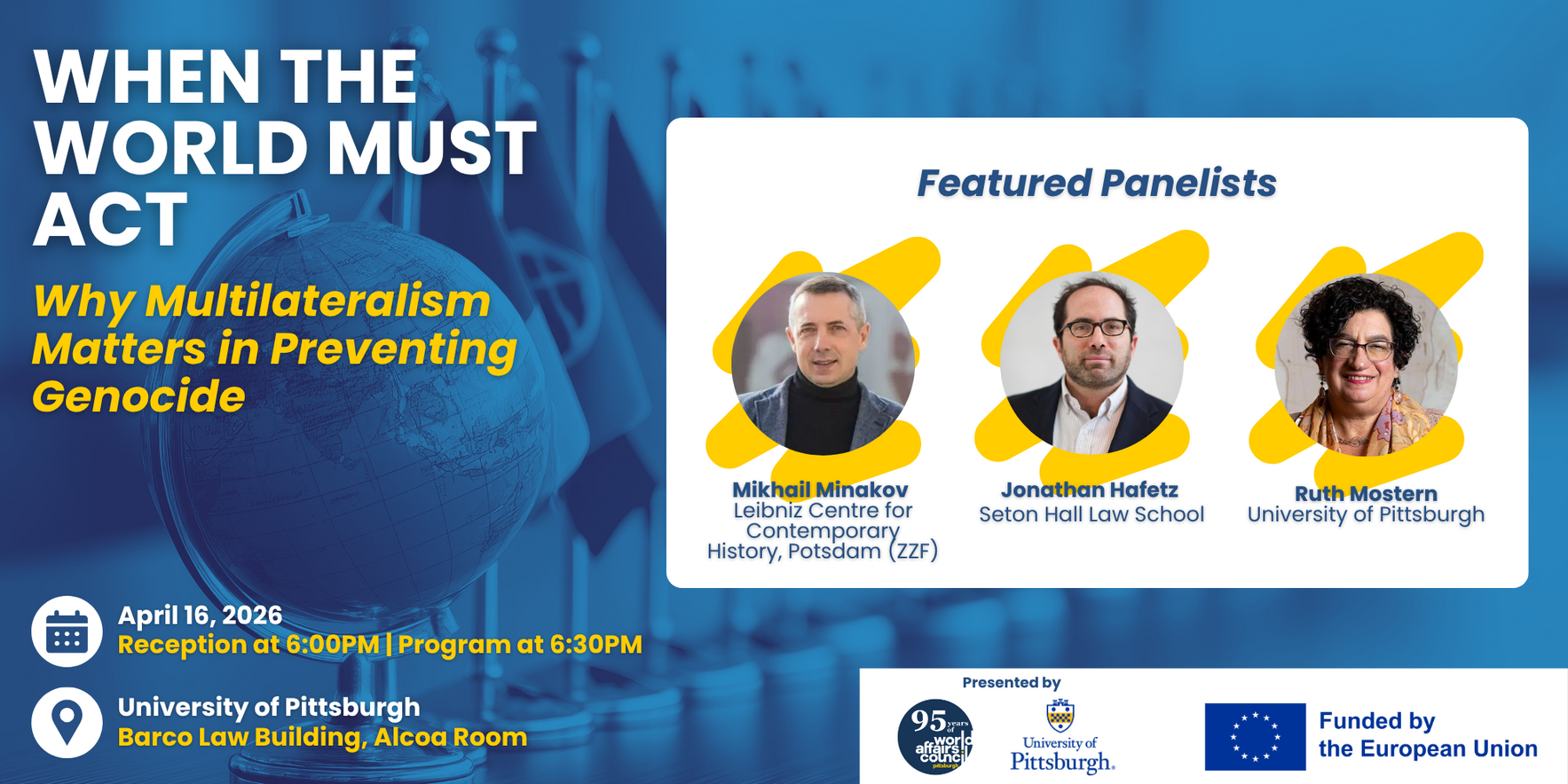
An important conversation about the state of multilateralism in international affairs and conflict resolution.
Why does "Never Again" keep failing? On the 75th anniversary of the Genocide Convention and the 20th anniversary of the Responsibility to Protect, this roundtable asks why the world still struggles to stop mass atrocities. From Rwanda and Darfur to Ukraine, Sudan, and Gaza, we invite you to consider why global commitments have repeatedly failed—and what can be done about it.
When the World Must Act: Why Multilateralism Matters in Preventing Genocide is a public panel discussion exploring the evolution, challenges, and future of multilateral cooperation in international affairs and conflict prevention.
What to expect:
- Learn how multilateralism developed in the international context
- Hear from expert practitioners and observers of multilateral systems
- Explore the role of international cooperation in preventing genocide and mass atrocities
- Engage directly with experts on the present challenges to multilateralism
Arrive at 6:00PM for networking reception and complimentary hors d'oeuvres. The speaking program begins at 6:30PM.
Featured Speakers
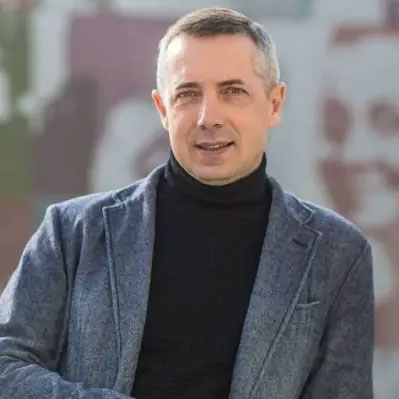 Mikhail Minakov is a political philosopher whose research focuses on democratic transformation, historical consciousness, and international norms in post-Soviet and global contexts. He is currently a Fellow at the Leibniz Center for Contemporary History, Potsdam, and spent nearly a decade as Senior Advisor on Ukraine at the Kennan Institute. He asks not just what these frameworks say, but why states and societies so often fail to live up to them.
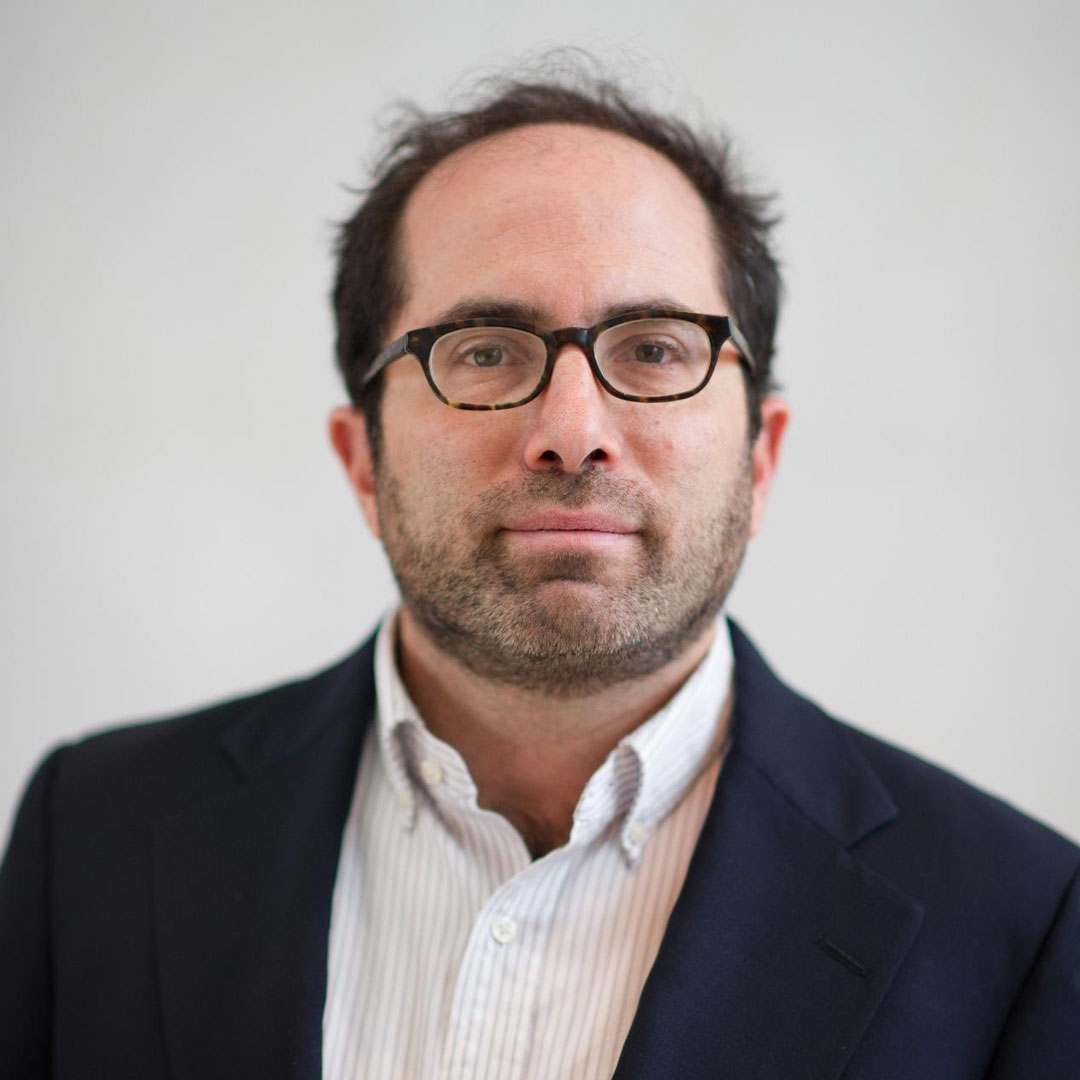 Jonathan Hafetz is Professor of Law at Seton Hall University and a leading expert on constitutional law, national security, human rights, and international criminal law. A former senior attorney at the ACLU, he has litigated landmark cases challenging arbitrary detention, torture, and abuses of executive power, and his work has been cited by the U.S. Supreme Court. Hafetz is the author of multiple books on accountability and the rule of law after mass violence, and he serves on the International Criminal Court’s List of Experts. His work critically examines the legal limits—and possibilities—of multilateral action in responding to genocide and mass atrocities.
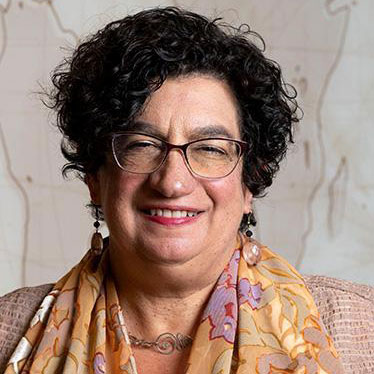 Ruth Mostern is an interdisciplinary historian and Director of the University of Pittsburgh's Institute of Spatial History Innovation and President of the World History Association. Her work examines how long-term environmental change, governance, and human decision-making shape political outcomes — including how states produce large-scale human suffering, often through neglect as much as intent. She brings to this conversation a historian's eye for pattern, structure, and the long view.
This event is presented by the World Affairs Council of Pittsburgh in partnership with the University of Pittsburgh European Studies Center, Department of History, Dietrich School of Arts and Sciences, Center for Russian, East Europe & Eurasian Studies, Center for African Studies, Global Studies Center, and University Center for International Studies.